
Need Help from working from anywhere contact us today

Reduce the risk of Cyber security breaches, by talking to one of our team
Our well-trained team are ready to help.
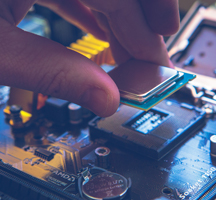
Need help to recover those important files?

Discover how TCCB can help you, get the best out of your technology
Empower your Business with our Microsoft 365 packages


What’s all the fuss about Solid State Drives anyway?
You may have over heard the tech head in your office talk about them, these SSD’s! but what are they?
SSD stands for Solid State Drive.
SSDs have been around for a while but are now really making head way as they have come done in price. They are the replacement for the old trusty hard drive. But what’s so special about them and why should you be replacing all the drives in your company computers or laptops with them?
Unlike our old hard drives SSD’s have no moving parts this gives you serious benefits:
Faster boot time of your computers, which is a challenge for most companies. Not having moving parts means that it also allows quicker access to files and folders as there is no moving arm that has to find the right place first. A standard drive takes between 5000 and 10000 micro seconds to access data where as a SSD takes between 35 to 100 micro seconds to do the same. So that is nearly 100 times faster. For an IT tech like me it makes it a no brainer – all drives in my company are SSD’s. If we buy in a new computer for internal use, or for a client that doesn’t have an SSD in the first job the Tech department does is recommend and change out.
Another key factors is that SSDs don’t generate the same heat like as those tradition hard drives. Standard drives have rotating discs and moving arms, which cause the drive to generate heat. The heat generated not only raises the temperature with in your computer system but over time the heat will help degrade the life of the hard drive – which can lead to loss or corruption of data.
A SSD uses flash memory to store data which provides better performance and reliability over a standard hard drive. In addition, SSD’s consume less power so in a standard computer over time your energy bill will be less. More importantly with your laptop, using SSDs will mean your battery will last you longer (which is a bonus for all of us that travel and work on the go).
The only downside that I see to and SSD is that the price is higher than a normal hard drive. A 512Gb SSD will set you back about £150 whereas the standard hard drive 500Gb costs approximately £50.
The question to ask yourself is: Does the benefit of a faster, cooler and less power-hungry system out way the additional cost?
May the SSD be with you!

The Computer Clinic have been integral in ensuring we have the best systems in place for taking our business forward and this was particularly tested when we moved premises last year, always a challenging time, but thanks to Dan we were up and running far quicker than we anticipated. The Computer Clinic offer the ideal solution for us...
I would recommend the Computer Clinic to anyone looking for either logo design, IT support or web design and build. Daniel has listened to my needs and quickly created the perfect logo design for my Handyman business. Having everything done in one place has the advantage of continuity of logo design and style on every medium.
We have used The Computer Clinic Bicester since their inception and can vouch first hand of their reliability, honesty and integrity. On many, many occasions the team’s ability to return calls and respond quickly has ensured the lowest possible downtime for us. The Computer Clinic Bicester took time to understand our IT set up and are always...





 Get Support